

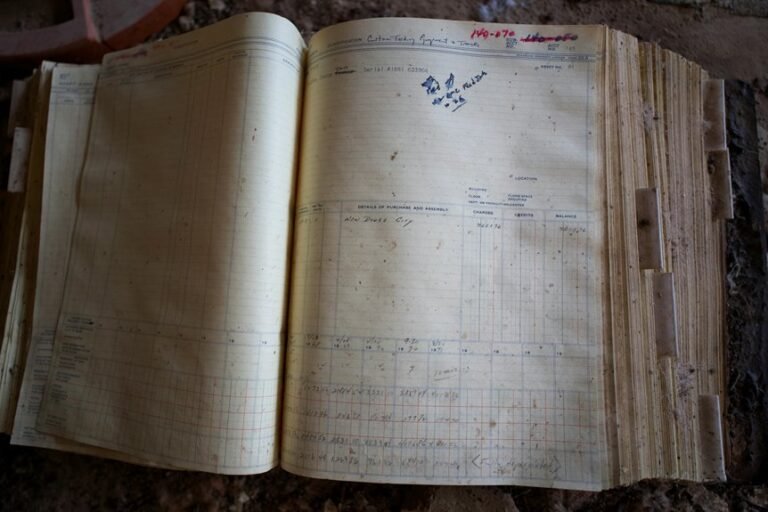
The CrystalFusion Observation Ledger aggregates real-time experimental records across entries 8474020001, 5034164100, 5873338605, 9548893729, and 5134455348. It outlines inputs, interactions, and outcomes with calibrated instrumentation and standardized metrics. The framework supports case-by-case analysis, anomaly detection, and reproducible practices under transparent uncertainty estimates. While the scope and procedures are clearly defined, implications for cross-entry comparability warrant careful scrutiny as methods are examined across the ledger.
What Is CrystalFusion Observation Ledger? Foundations and Scope
CrystalFusion Observation Ledger is a structured record system designed to capture, organize, and analyze real-time observations within CrystalFusion experiments. It functions as a formal framework that documents experimental inputs, interactions, and outcomes for evaluation. Foundations overview establishes core principles, while Scope boundaries delimit applicable processes and data types. The ledger supports transparent interpretation, repeatable methods, and disciplined inquiry across experimental domains.
Case-by-Case Patterns in Entries 8474020001 and 5034164100
This section examines case-by-case patterns in entries 8474020001 and 5034164100, highlighting how discrete observations diverge or converge under varying experimental conditions.
The analysis emphasizes methodical comparison, consistent metrics, and independent replication, guiding readers toward a neutral ledger interpretation.
Case patterns emerge as condition-dependent signals, while ledger interpretation remains cautious, emphasizing traceability, reproducibility, and clear documentation.
Detecting Anomalies: 5873338605, 9548893729, and 5134455348
Anomalies in entries 5873338605, 9548893729, and 5134455348 are examined to determine whether deviations reflect systematic bias, random noise, or condition-driven signals, with emphasis on consistent metrics and traceable documentation.
The assessment emphasizes anomaly detection as a means to preserve data integrity, ensuring transparent, objective evaluation while avoiding speculation and maintaining disciplined, verifiable reporting for ongoing monitoring and review.
Methodologies and Instrumentation Guiding the Observations
What frameworks and instruments govern the observations, ensuring that data collection remains systematic and reproducible across conditions?
The methodologies emphasize observational taxonomy to classify phenomena while maintaining consistency.
Instrumentation calibration ensures accuracy across sessions, platforms, and environments.
Documentation records procedural steps, calibration curves, and uncertainty estimates.
This approach supports transparent replication, cross-study comparability, and objective interpretation without relying on speculation or subjective bias.
Frequently Asked Questions
How Were the Entries Originally Compiled and Verified?
Entries were compiled via standardized logging procedures and cross-checked against independent records. Researchers describe collecting metadata and applying validation protocols to confirm accuracy, ensuring traceability while preserving analytic discretion for individuals seeking autonomy and knowledge.
What Is the Archival Lifespan of the Ledger Data?
Data longevity remains uncertain; archival lifespan depends on format, storage, and governance. The ledger’s future is tied to data formats and archival backups, with staggered refresh cycles and periodic integrity checks to mitigate degradation and obsolescence. data formats, archival backups
Are There Privacy or Access Restrictions for Observers?
Privacy restrictions exist; observer access is governed by governance policies and permitted only under authorized roles. The framework emphasizes transparency while protecting sensitive data, ensuring independent scrutiny within defined boundaries for those seeking freedom of information and accountability.
How Often Are the Observation Methodologies Updated?
The observational cadence is subject to ongoing review; improvements occur as needed. Methodological updates are implemented periodically, assessing data integrity and adaptability. The process remains transparent, aiming to balance rigor with freedom, without delaying critical insight.
Can External Researchers Request Data Reanalysis?
External researchers may request data reanalysis through approved external collaboration channels, subject to data provenance verification and governance review. The process emphasizes transparency, reproducibility, and consent, balancing openness with privacy, security, and institutional policies.
Conclusion
The ledger closes with impeccable order, a beacon of reproducibility in a chaos-filled lab. Entries whisper that inputs matter, yet outcomes boast their own independence, as if calibration curves were mere suggestions. Case-by-case patterns appear, then retreat, like obedient shadows. Anomalies refuse to vanish, skulking behind standard metrics, demanding scrutiny. In this idealized record, transparency shines brightest, even as uncertainty hums softly in the margins—reassuring proof that science can measure doubt with scholarly precision. Irony, apparently, is the truth’s quiet companion.